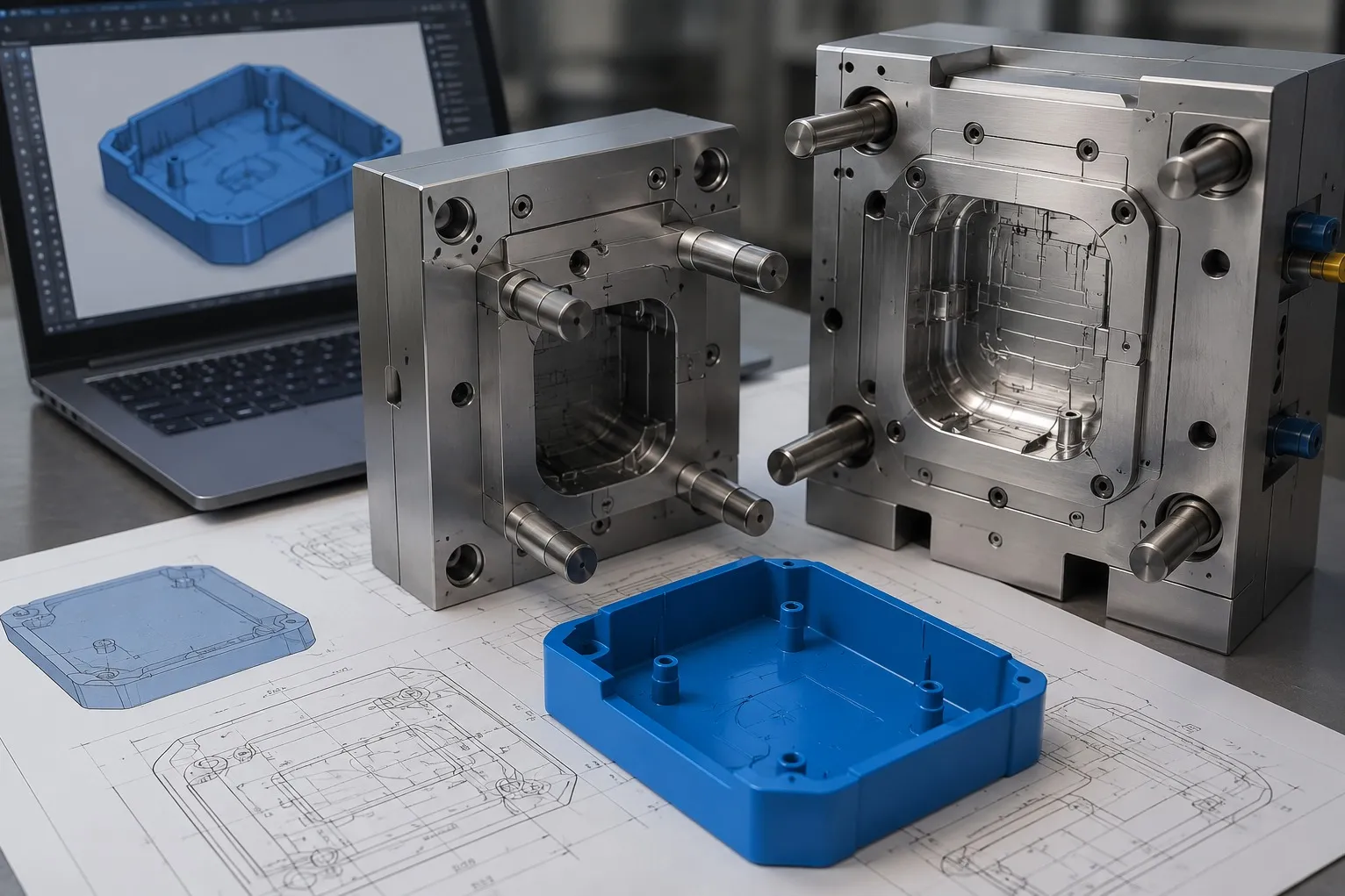
The quality of an injection-molded component begins with its mould. A poorly planned tool can cause recurring defects, slow production and increase maintenance requirements.
Professional plastic mold design and tooling services consider both the component geometry and the production process. The tool must allow plastic to flow evenly, cool correctly and release without damaging the finished part.
Key design considerations include:
- Gate type and position
- Cooling-channel layout
- Parting line
- Ejection method
- Draft angles
- Expected shrinkage
- Number of cavities
- Production volume
Tooling cost varies according to part complexity, mould material, cavity count and expected service life. Buyers should therefore avoid comparing prices without reviewing the complete technical scope.
Trade Linkers in Ghaziabad planning repeated production should treat tooling as a long-term manufacturing asset. A durable, maintainable mould may offer better value than a lower-cost option that requires frequent repair.
Before machining begins, the component drawing should be reviewed for manufacturability. Once the tool is ready, trial samples can be inspected and tested. This step-by-step approach helps establish a stable foundation for consistent injection molding.
Keywords