Every high-quality plastic product begins long before the manufacturing process starts. It begins with a carefully engineered mold. Whether producing packaging trays, injection molded components, cosmetic containers, or industrial products, the quality of the mold directly influences the quality of the final product. A well-designed mold ensures consistency, minimizes defects, reduces production costs, and supports efficient large-scale manufacturing.
Trade Linkers works with businesses that require customized plastic manufacturing solutions, where mold design is an essential part of delivering reliable products. Manufacturers in Ghaziabad and across Uttar Pradesh are increasingly recognizing that investing in a precision-designed mold leads to better production efficiency and long-term cost savings.
While the mold remains hidden throughout the product's life, its impact is visible in every finished component.
What Is Plastic Mold Design?
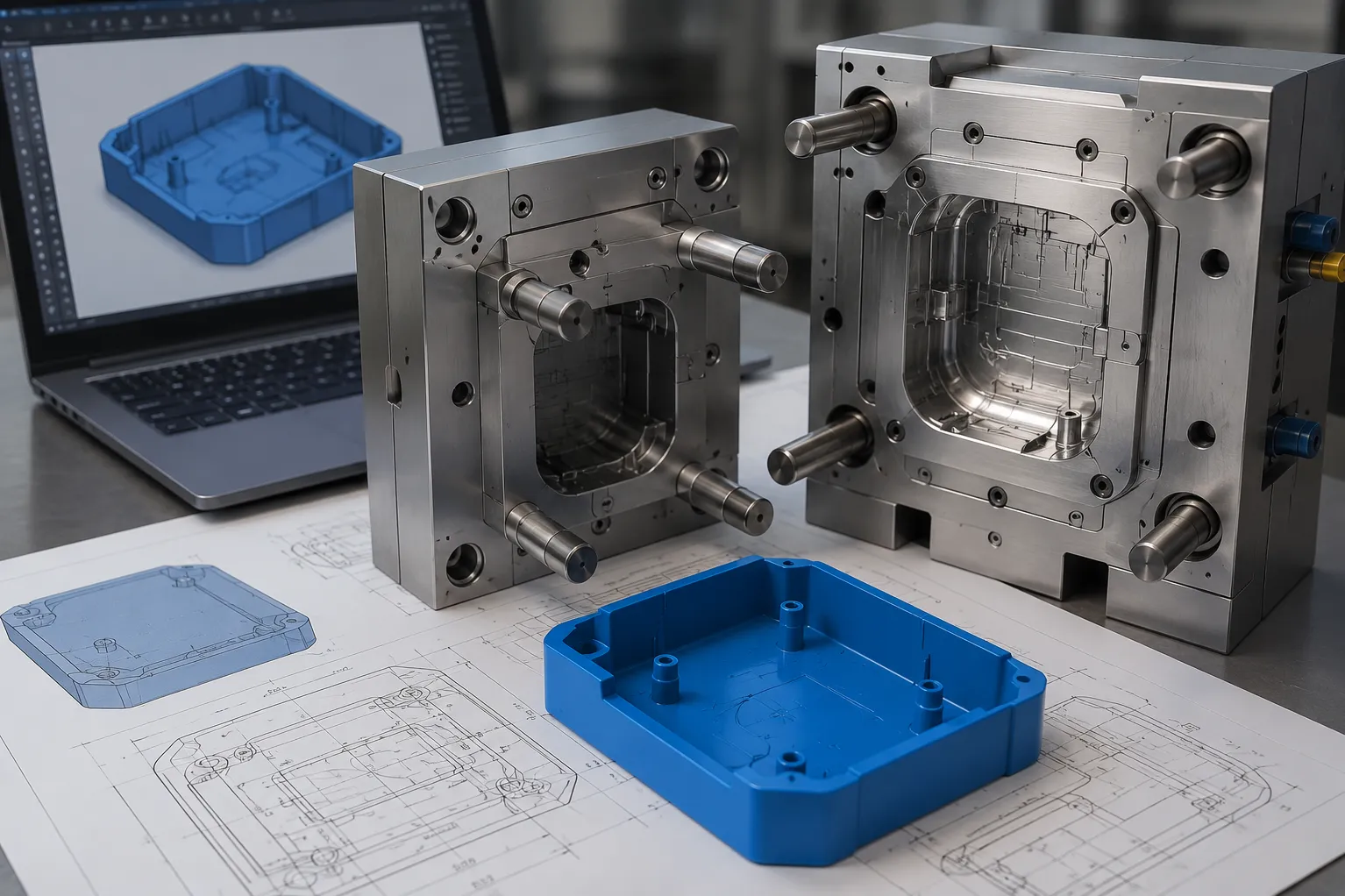
Plastic mold design is the process of creating a precision tool that shapes molten plastic into the required product. Every detail—from dimensions and wall thickness to cooling channels and ejection mechanisms—is carefully planned before production begins.
A properly designed mold helps manufacturers achieve:
- Accurate product dimensions
- Consistent product quality
- Faster production cycles
- Reduced material waste
- Better surface finish
- Longer mold lifespan
Without proper design, even high-quality raw materials and advanced machinery cannot consistently produce reliable results.
Why Mold Design Matters in Manufacturing
Many businesses focus only on the finished product, but experienced manufacturers understand that the mold determines how efficiently production will run.
A well-designed mold can:
- Improve production speed
- Reduce manufacturing defects
- Ensure uniform product dimensions
- Simplify product assembly
- Lower maintenance requirements
- Reduce rejection rates
These advantages become even more significant during high-volume manufacturing, where small design flaws can multiply into costly production issues.
Key Elements of an Effective Plastic Mold
Every mold is designed according to the product's intended application, but several features remain important regardless of the industry.
A good mold typically includes:
- Precision cavity design
- Balanced material flow
- Efficient cooling channels
- Proper venting system
- Smooth ejection mechanism
- Durable mold material
- Accurate dimensional tolerances
When these elements work together, production becomes more stable and product quality remains consistent across thousands of manufacturing cycles.
Common Mistakes During Mold Planning
Developing a mold without sufficient planning often results in repeated production challenges.
Some of the most common issues include:
- Inadequate wall thickness planning
- Poor cooling channel placement
- Ignoring material shrinkage
- Weak mold construction
- Insufficient venting
- Overlooking future production requirements
Correcting these problems after production begins usually involves expensive mold modifications and unnecessary downtime.
Questions Buyers Should Ask Before Approving a Mold
Before investing in mold manufacturing, businesses should discuss a few important points with their supplier.
Consider asking:
- Is the mold designed for future production expansion?
- Which material is best suited for the intended product?
- How many production cycles is the mold expected to support?
- Can prototypes be tested before mass production?
- How will dimensional accuracy be verified?
- What maintenance will the mold require over time?
These discussions help establish realistic expectations and reduce the likelihood of costly revisions later.
How Good Mold Design Supports Business Growth
A precision-designed mold is not just a manufacturing tool—it is a long-term business asset. Reliable molds enable faster production, improve product consistency, and reduce interruptions caused by defects or equipment adjustments.
Businesses also benefit from:
- Lower production costs over time
- Improved customer satisfaction
- Consistent product appearance
- Better compatibility with automated production lines
- Greater flexibility for repeat manufacturing
For companies introducing new product lines, investing in mold quality from the beginning often results in smoother production and stronger market performance.
Choosing the Right Manufacturing Partner
Designing an effective mold requires technical expertise, practical manufacturing knowledge, and an understanding of the product's intended application. A manufacturer should evaluate not only the product design but also material selection, production volume, and future scalability before creating the mold.
For businesses in Ghaziabad and throughout Uttar Pradesh, working with an experienced manufacturer such as Trade Linkers helps ensure that mold development is approached strategically rather than simply as a tooling process.
A well-designed plastic mold lays the groundwork for consistent manufacturing, reliable product quality, and efficient production for years to come. By focusing on precision at the design stage, businesses can reduce operational challenges, improve overall productivity, and create plastic products that meet both industry standards and customer expectations.
Keywords