
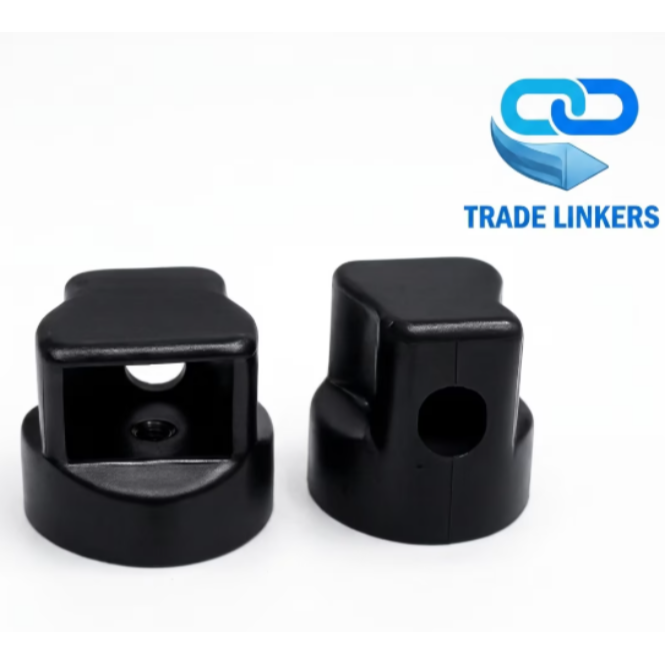
Injection molded parts are found in products people use every day, from household appliances and automotive components to medical devices and industrial equipment. Their popularity comes from one key advantage: they combine precision, durability, and scalability, making them suitable for both small and large production runs.
For businesses planning to source plastic components, understanding the manufacturing process can make a significant difference in product quality and long-term costs. Trade Linkers works with businesses seeking dependable plastic manufacturing solutions, helping them produce components that meet both functional and commercial requirements. Across Ghaziabad and Uttar Pradesh, industries increasingly rely on precision-molded plastic parts to improve product consistency while keeping manufacturing efficient.
Unlike conventional fabrication methods, injection molding involves injecting molten plastic into a specially designed mold under controlled pressure. Once cooled, the material solidifies into a finished component with highly accurate dimensions and repeatable quality.
Why Injection Molding Is Preferred Across Industries
Manufacturers often choose injection molding because it supports mass production without compromising consistency. Every part produced from the same mold maintains nearly identical dimensions, making the process ideal for industries where precision matters.
Some sectors that extensively use injection molded components include:
- Automotive manufacturing
- Consumer electronics
- Medical equipment
- Food processing machinery
- Electrical products
- Home appliances
- Agricultural equipment
- Industrial machinery
The versatility of injection molding allows businesses to create everything from tiny connectors to large industrial housings.
Features That Define High-Quality Injection Molded Parts
Not every molded component delivers the same performance. Experienced buyers usually evaluate several factors before approving production.
Look for these qualities:
- Accurate dimensions and tight tolerances
- Smooth and uniform surface finish
- Consistent wall thickness
- Minimal flash or excess material
- Strong structural integrity
- Material compatibility with the application
- Reliable repeatability across production batches
These characteristics directly influence assembly efficiency, product lifespan, and customer satisfaction.
Questions Worth Asking Before Placing an Order
Selecting a manufacturing partner involves more than comparing prices. Asking the right questions early can help avoid production delays and quality issues.
Consider discussing:
- Which plastic material is best suited for the application?
- Can the mold support future production expansion?
- What quality inspection methods are followed?
- Are prototypes available before bulk manufacturing?
- How are dimensional tolerances maintained?
- What production capacity is available for recurring orders?
A transparent manufacturer will explain these aspects clearly instead of focusing only on production costs.
Material Selection Makes a Bigger Difference Than Many Realize
Choosing the correct polymer affects durability, flexibility, temperature resistance, chemical compatibility, and appearance.
Common materials include:
- Polypropylene (PP) for lightweight industrial products
- ABS for durable consumer goods
- Nylon for engineering applications
- Polycarbonate for impact resistance
- HDPE for chemical-resistant components
- Food-grade plastics for packaging and food-contact products
Selecting an unsuitable material may lead to premature failures even when the molding process itself is flawless.
Common Buying Mistakes
Many procurement teams focus entirely on mold cost while overlooking production efficiency and long-term reliability.
Some frequent mistakes include:
- Choosing materials based only on price
- Ignoring mold maintenance capability
- Overlooking production tolerances
- Not requesting sample approval
- Selecting suppliers without quality documentation
- Underestimating future production volumes
Correcting these issues after production begins often costs significantly more than addressing them during the planning stage.
How Precision Manufacturing Benefits OEMs
Original Equipment Manufacturers depend on consistent components because even small dimensional variations can affect final assembly.
Well-manufactured injection molded parts offer:
- Faster assembly operations
- Reduced rejection rates
- Better product reliability
- Lower maintenance costs
- Improved inventory consistency
- Enhanced customer satisfaction
These advantages become increasingly valuable as production volumes grow.
As manufacturing industries continue expanding across Ghaziabad and nearby industrial regions of Uttar Pradesh, businesses are placing greater emphasis on dependable suppliers capable of maintaining quality throughout every production cycle. Companies such as Trade Linkers support this demand by providing precision injection molded parts tailored to industry-specific requirements, from concept development to production.
Whether you're introducing a new product or replacing an existing supplier, evaluating manufacturing expertise, material selection, and quality control practices will help ensure that every molded component contributes to the performance, reliability, and long-term success of your finished product.